
New Peer-Reviewed Study Shows Natel FishSafe™ Turbines Represent a Step Change in Fish Survival
New Peer-Reviewed Study Shows Natel FishSafe™ Turbines Represent a Step Change in Fish Survival — Offering an Essential Tool to Keep and Grow Hydro’s Grid Capacity
ALAMEDA, Calif. – March 25, 2026 – Natel Energy today announced a new peer-reviewed study in the Journal of Ecohydraulics positioning its FishSafe™ turbine runners as a premier technology for modernizing the global hydropower fleet. As operators navigate aging infrastructure and strict environmental regulations, this study illustrates that the state-of-the-art in turbine runner designs has fundamentally evolved. Through a first-of-its-kind, 1:1 comparison of FishSafe and conventional turbine runners, the research illustrates that Natel's FishSafe runner designs offer a pathway to modernize the global hydropower fleet, maximize energy generation, and protect fish.
With soaring global energy demands, keeping existing, aging hydropower plants online is critical. Operators have historically been forced to choose between power production and fish protection, and face high capital and operational expenses to address fish passage concerns. By highlighting how Natel’s novel turbine runner shapes match conventional runner diameter, shaft speed, and power output while safely passing fish, the study illustrates that fish survival can be dramatically improved with a straightforward upgrade path.
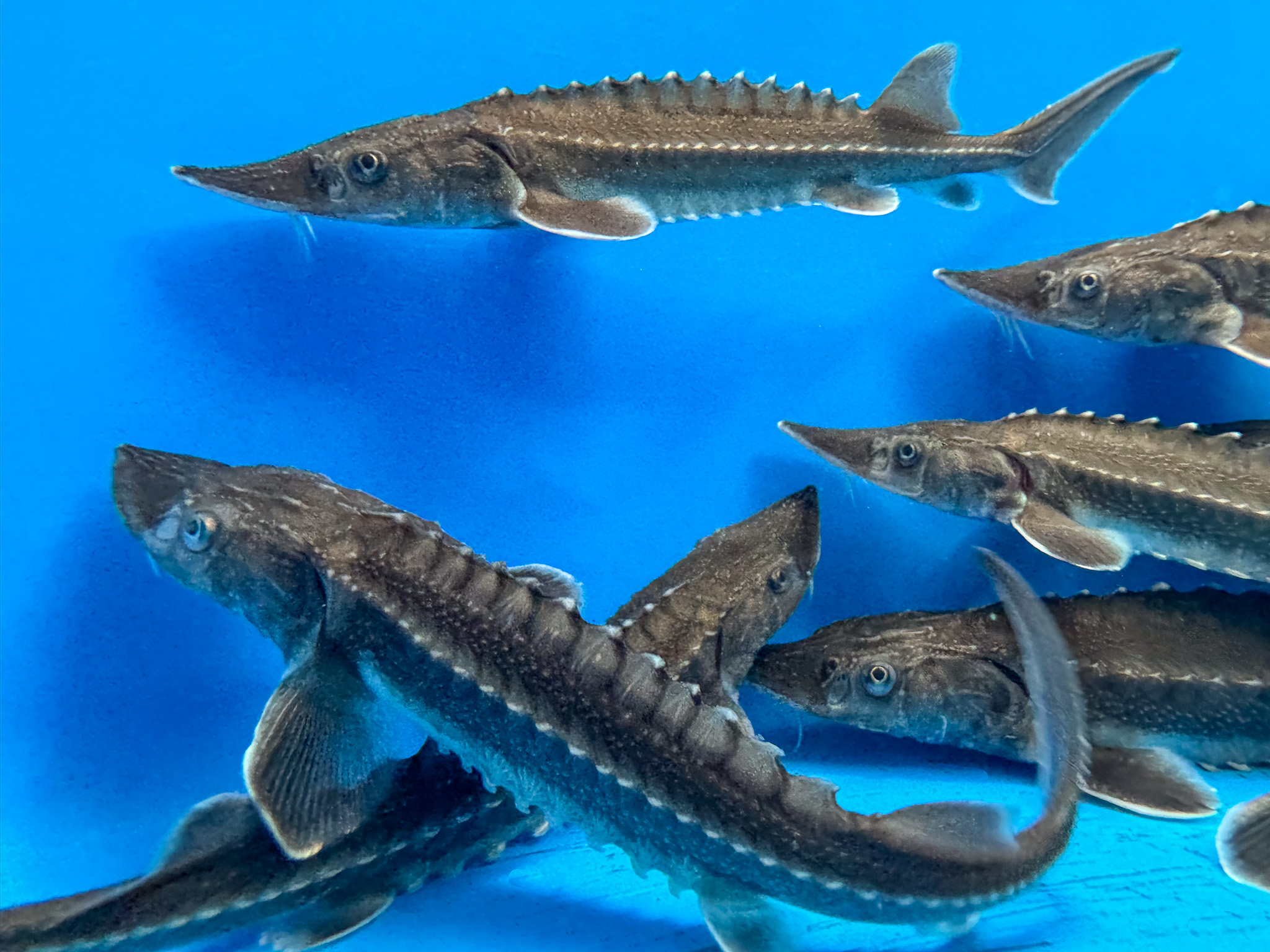
To independently validate this technology, Natel partnered with the Fangue Fish Conservation Physiology Lab at the University of California, Davis. Funded by a competitively awarded grant from the U.S. Department of Energy, and co-authored by members of the Fangue Lab and Natel, the study evaluated injury and survival outcomes for juvenile white sturgeon (Acipenser transmontanus). Much like salmon, sturgeon are anadromous fish that mature in saltwater environments before returning to freshwater rivers to reproduce. Every few years, adults travel upstream seeking cold, fast-moving currents to spawn. Because sturgeon are exceptionally long-lived, individual fish migrate multiple times over their lifespans. Sturgeons are currently considered the most endangered group of species on Earth.
The controlled experiment, conducted under the guidance of the Institutional Animal Care and Use Committee at UC Davis, compared a conventional runner profile (thin, straight leading edges) to a Natel FishSafe runner (designed with thick, slanted leading edges) at the same hydraulic head and rotational speeds. During the trials, 112 juvenile white sturgeon were passed through the Natel FishSafe runner and 115 through the conventional runner. To establish a baseline for handling and facility survival, an additional control group of 125 fish were passed through the system, bypassing the turbine. To limit unnecessary trauma, all fish were anesthetized prior to passage. To improve understanding of how fish interact with the runner blades, every passage event was filmed using high-speed video, and fish were assessed for injuries both immediately and after a 48-hour observation period. The only operational variable changed was the blade shape.
Tests were conducted at five blade peripheral speeds ranging from 15.0 to 27.6 m/s (approximately 33.6 to 61.7 mph). Under equivalent hydraulic conditions, the 48-hour survival rates for the FishSafe runner were 100% across nearly all speeds, with only one delayed mortality at the highest speed tested. By comparison, survival rates for fish passing through the conventional runner were between 42% and 78%, with approximately one-third of the tested fish suffering fatal severing injuries. Interestingly, analysis of strikes observed in the high-speed video footage revealed that the FishSafe runner exposed fish to a much lower strike probability than the conventional runner. This data demonstrates that Natel FishSafe turbine blade profiles successfully eliminate the historic trade-off between clean energy generation and fish protection.
"For decades, it was assumed that for a turbine to be fish-friendly, it had to be fundamentally different—rotating at slower speeds or requiring a larger physical footprint to produce the same power," said Sterling Watson, Principal Engineer at Natel Energy. "This collaborative study with Nann Fangue's group shows, for the first time, that changes to blade shape alone can dramatically reduce turbine passage risks for fish, while matching the speed, size, and power output of conventional turbines. These findings provide a practical pathway to modernize existing plants, allowing them to keep vital capacity on the grid while protecting imperiled species like sturgeon."
These sturgeon findings build upon a robust track record of peer-reviewed research validating FishSafe technology across diverse species. Previous landmark studies, conducted alongside partners such as the Pacific Northwest National Laboratory and Kleinschmidt, have demonstrated 100% safe passage for the American eel, juvenile alewife (river herring), and large rainbow trout.
The full peer-reviewed study can be accessed online here: https://www.tandfonline.com/doi/full/10.1080/24705357.2026.2636289
About Natel Energy
Natel Energy is a technology and engineering company specializing in FishSafe™ turbine design that enables utilities to integrate the necessary costs of grid modernization with environmental compliance. By reducing the need for generation-limiting screens or spill, Natel FishSafe™ turbine runners unlock gigawatt-scale capacity for the AI-driven economy while lowering operational costs. Validated by installations across the U.S. and Europe, Natel’s technology delivers 98–100% safe downstream passage and is backed by world-class engineering, proprietary models, and unique in-house scale fish passage testing capabilities. Natel is a privately held company based in Alameda, California.


