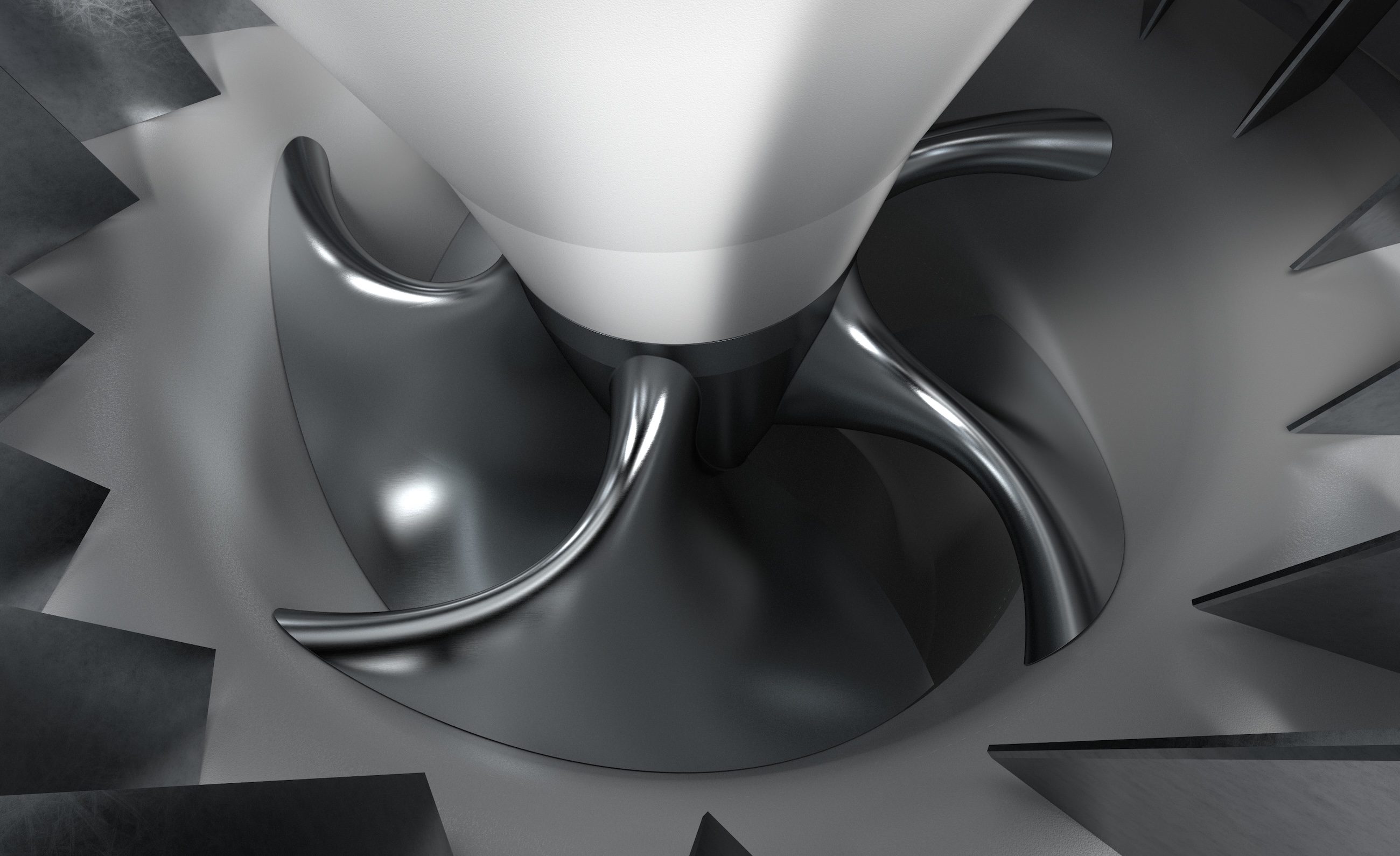
The Fish Enhancement, Mitigation and Research Fund (FEMRF) selected Natel Energy to assess whether new turbine runners could improve downstream fish passage at the New York Power Authority (NYPA)'s St. Lawrence-FDR Power Project without reducing generation. The study was conducted in collaboration with NYPA.
Natel developed preliminary FishSafe™ Restoration Hydropower Turbine (RHT) runner designs for the two preexiting unit types at the 940 MW facility, which sits on the U.S. side of the Moses-Saunders Power Dam. CFD simulations predict survival rates above 98% for American eel across all simulated operating conditions, at peak hydraulic efficiencies of 94.6% and 94.3%, within the measurement uncertainty of the existing units and with no change in generating capacity. The designs are engineered as in-place replacements for the existing runners, requiring no major changes to the dam, powerhouse structure, or plant operations.

.png)